Tuesday, 5 May 2015

UK Arts Policy Election Special

Image result for conservative symbol         Image result for labour symbol
The parties vying for votes in tomorrow's UK general election have quite rightly not focused their campaigns on cultural policy. They've also failed to address more important issues like housing, productivity and international relations, but that's another story. The parties can be blamed for many evasions, but they shouldn't be faulted for giving culture a low priority, I'm more concerned by the flaccid critique of such cultural policies they have laid out, which is squarely the responsibility of the cultural sector itself. 

Labour has produced a document elaborating on their rather bare-bones manifesto commitments. The pledge that's received most attention is the guarantee that every child will be entitled to creative education. I'm all for creative education, but the reason it's been squeezed out is that a generation of lazy politicians have responded to every fashionable concern by dictating that it must be added to the school curriculum. No one can reasonably disagree with creative education, but politics is about difficult trade-offs. Unless they're willing to tell us what schools should teach less of, we should treat it with disdain. Better to give teachers a bit more freedom to teach.

They think there's an 'urgent' need to 'rebalance' regional arts funding. It's funny what politicians think is and isn't urgent. Housebuilding? Can wait. Regional arts funding? Right on it. But really, what silly parochialism. London's institutions aren't local, they're global. You can't balance the British Museum against local museums in the north. The BM is a benefit to the whole world. There is, however, a chronic shortage of funding for regional museums. But neither party wants to address that, because they choose to blame local governments. Local government in the UK is dependent on central government for most of its funding, and has little freedom of action once it's carried out statutory duties. It exists mainly to shield national government from responsibility for poor local services.

The most stupid part of Labour's cultural charter is their commitment to 'robust' protection of intellectual property. It's already far too robustly protected, to the benefit of vested corporate interests rather than struggling artists. Patents and copyrights now act as a tax on creativity and innovation. But protecting special interests that benefit from copyright (or think they might in future) might win a few votes. No one is voting the common interest, so principles be damned. 

The Conservatives say almost nothing about culture. To be fair, their great cultural achievement in office has been to eschew the frenetic micro-management that characterised the previous Labour government. Benign neglect is an under-rated virtue. I'm not being facetious; they really deserve credit for this. The manifesto commits them to maintain free admission, which is unhelpful when they're also cutting funding. It reduces museums' freedom to maneuver in the context of reduced funding, which is their fault, whilst taking credit themselves for the benefit of free admission. Politicians legislating for free admission without funding it is grotesque. The Conservatives also want a 'great exhibition' in the north, which is the most feeble PR response to calls for increased regional arts funding I've heard. PR is also behind the Conservatives' expansion of tax breaks to fund acquisitions, which is bad policy but effective spin. That deserves a separate post later; it's not as good as it seems. I've said less about the Conservatives because they've had less to say about culture, not because they're necessarily a better option. Neither party offers much, and what they do offer isn't good. Rather a microcosm of the whole election, I think.

The response to the election debates from the cultural sector has been predictable and clueless. They kid themselves that they're being politically savvy by promising to deliver what they think politicians want: good value and economic growth for the right, social inclusion for the left. They've promised the same for a generation, but the same sort of people still go to museums, and the same sort of people don't. The economic growth argument is nonsense, and they know it. All spending has a multiplier effect, and the cultural industries don't have the biggest multiplier. Governments can get better value elsewhere. In boom times it justified a few extra pounds of spending, perhaps. But today they've made their own argument for defunding. 

The argument they all shy away from is the argument about why culture matters at all. They seem to think it's naive to imagine that it'll have any effect, though I suspect it's because they don't know how to make it. One thing's for sure. If all they can offer is dishonest claims about value for money and hollow promises about social inclusion, they don't deserve political attention or government funding.

Monday, 4 May 2015

The logic of our age

Embedded image permalink
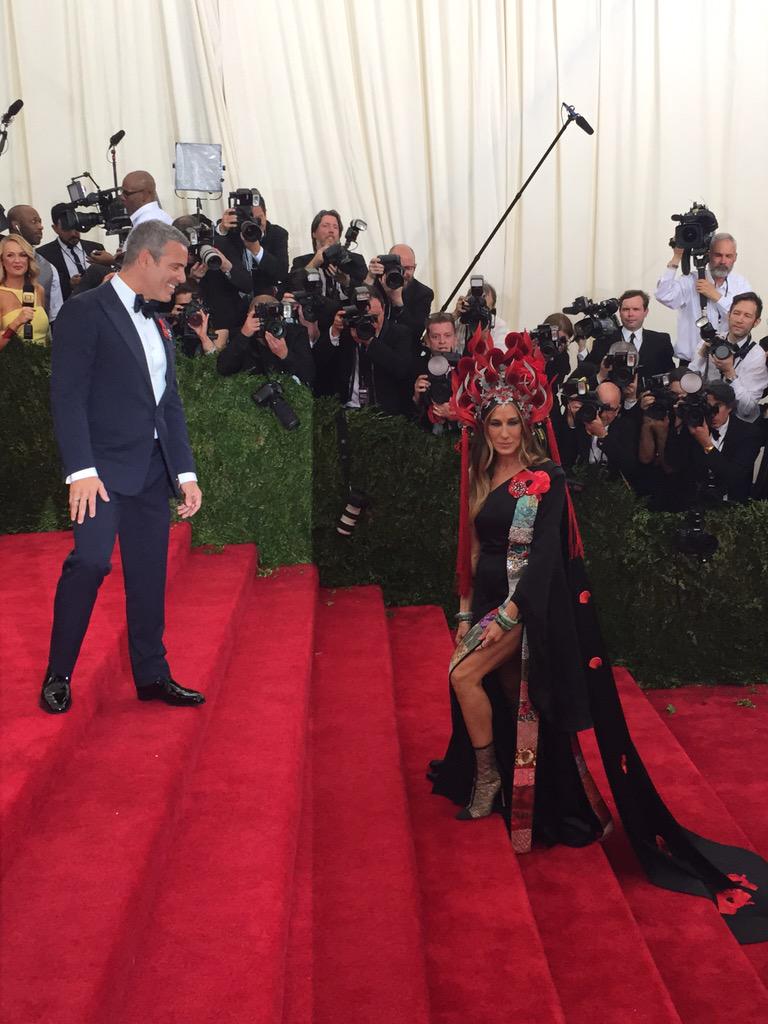
The entire Metropolitan Museum of Art in New York was closed yesterday, so that rich people could have a party. In the UK museums were traditionally reticent about renting themselves out for private functions, but some now market themselves aggressively. It starts with out-of-hours rental, but once the principle is established and the tills start ringing the plutocrats encroach on normal opening times. It's like the old joke where a man asks a woman if she'd sleep with him for a million pounds. On careful reflection the impecunious lady agrees. "Would you sleep with me for five pounds?" he then asks. "What kind of woman do you think I am?" she replies angrily. "We've already established that; we're just haggling over the price". It might be more expensive to hire an entire museum during opening hours, excluding the public, but it's just a matter of haggling. 

The Victoria and Albert Museum is already notorious for its vicarious closing hours so they can set up for parties. A number of other museums often have random room closures for private events. I've also heard anecdotal reports of damage to art during a wedding piss-up at the Wallace Collection. Weddings are appropriately a time for drunken revelry. Museums are not an appropriate place.

It saddens me that people can travel from all over the world to see the Met, but then be denied access because only the super-rich can go today. It would be bad enough if the Met were making a difficult compromise to raise needed funds. But they actually seem proud of themselves. Its Twitter feed is stuffed with pictures of celebrities, as if the museum's purpose is to provide a backdrop for celebrity photos, 'drooling over wealthy people' as Tyler Green put it on Twitter.

This is the apotheosis of the modern museum. The real experience is reserved for the wealthy. But the rest of us can look admiringly at how cool museums are, because celebrities hang out there. Maybe drooling over celebrity photos on the Met's Twitter feed is the museum experience today.

Thursday, 23 April 2015

Bad Acquisition in Chicago

The Art Institute of Chicago has acquired a collection of contemporary art that they describe as the 'largest' in their history (it's been misreported as 'greatest'). It includes artists I like (Jasper Johns and Gerhard Richter) and artists I don't (Warhol, Koons, Hirst). But some people like that sort of thing, and there's no question that the art is a worthy addition to the Institute's collection. It's a bad acquisition not because of the pictures, but because they paid too high a price, agreeing to display the collection together for fifty years. That is not really a gift. It's an expensive acquisition that hands over a public space and subverts it to the whim of vain plutocrats.

Donors Stefan T. Edlis and Gael Neeson are buying themselves a memorial, over-riding judgments of more expert curators and over-riding the changing views of posterity to insist that their taste is imposed for half a century, that their pictures are shown whilst other, perhaps better pictures are consigned to storage. If the importance of the collection were beyond doubt then the condition would be unnecessary. The collection's focus on the most currently fashionable artists makes it especially vulnerable to changing taste, and I suspect that future curators and visitors will bitterly regret this acquisition.

The press release disingenuously claims that the museum itself proposed the condition. That trivial piece of spin disgusts me far more than the condition itself. The museum has not only given them gallery space, it implies that the plutocrats' generosity is untainted by conditionality. They get to eat their cake and have it; they take over part of the museum for half a century, and pretend that it was some one else's idea. They get a grand boastful memorial that imposes a cost on the public, and they get to be presented as modest and public-spirited. The museum prostitutes itself twice over, first in handing over the galleries, and second in surrendering its dignity. 

Museums should have the courage to turn down costly bequests like this, which do themselves and their patrons no favours. The Institute is already stuffed to the rafters with treasures. Unless they're adding another wing (or maybe subdivide the big atrium they built for parties), showing these pictures means not showing better pictures. Just say no, kids.

Monday, 13 April 2015

Campaigning for Good Curatorship

I like curators, especially good ones. So I should be delighted to discover that there's a Campaign for Good Curatorship. The campaign wants to put knowledge of collections back at the heart of museums, and I'm all for that too. And they want 'good' rather than 'great' or 'excellent' curatorship, which is a victory for language and common sense.  But I recoil from its manifesto, which seems to be trying to appropriate all the anti-curatorial guff that's infected the museum sector. 

They say that museums "have a vital role to play in a healthy, tolerant and inclusive society". Fine sentiments, but they don't survive scrutiny. What can curators do to fulfill their 'vital' role in promoting health? Do they mean 'vital' in the sense of central to what curators do, or vital in the sense that museums must lead the charge on behalf of society? Neither claim is credible. And that weasel-word 'inclusion'. No one explicitly argues for an 'exclusive' society, but the meaning of inclusive is hotly contested. The term is either politically contentious or else vacuous. 

They want to reach a 'balance' between community engagement and expertise in objects. Maybe this is just a problem of hasty drafting, but I think treating engagement and expertise as opposite poles that require balancing is a disastrous strategy. Museums will engage communities on the basis of their collections. Curatorship has been undermined because museums have tried to convince politicians that they should be funded because they can play all kinds of instrumental roles like promoting social inclusion and public health. Convincing them of the value of museums in their own terms seemed to much like hard work. But the other approach has backfired, because it has put museums in direct competition with specialists. In a contest over the health budget, health professionals will beat museum professionals. 

The manifesto concludes with some specific demands, but they are as wishy-washy as something from the student union. They want the Department for Culture, Media and Sport to 'recognise' the role of good curatorship, whatever 'recognition' means. Worse still they want the Arts and Humanities Research Council to sponsor research into the public benefit of curatorship. Can nothing happen without a government grant these days? Given that the campaign's whole premise is that there is public benefit to curatorship, this isn't really research - it's marketing. Just because it's marketing a cause I happen to espouse doesn't mean it needs or deserves a government grant.  

This gets to the nub of my beef. The problem isn't that curatorship is 'under-researched' or that the DCMS hasn't 'recognised' its value. The problem is that the case for curatorship hasn't been made robustly. In fact let's put it in simpler terms: the case for knowledge hasn't been made robustly. For a generation museums have been capitulating to an agenda that devalues objects and disdains cultural knowledge in favour of the instrumental pursuit of political objectives.

We don't need government grants or campaign bullet points. We need to make a more forceful case for the value of culture. Lots of people are doing that already. I often disagree with many of them; it doesn't have to be a unitary case, and we don't all need to be friends. There are lots of ways to value and engage with culture. But lily-livered appeasement of the access and social justice agenda is fatal. Good curators don't promote public health or an inclusive society. They understand quality and context. The select and preserve and display and interpret objects, and in doing those things they play a role in defining a society (heck, let's use an old-fashioned term: civilization) that's worth being included in. The historical and artistic legacy preserved in museums is valuable in its own right, and is degraded when it's deployed as a tool in the latest public health initiative. Let no one be in doubt about the vital role of curators, and let's not let this campaign get away with underselling it.

Sunday, 5 April 2015

What ails Italy?

I love Italy, really I do. Great food, great art, great landscape. Transport is fantastic; well-maintained roads (well, better than UK or US), cheap, regular and reliable trains. But the experience of trying to see art in Italy is so needlessly fraught. I look forward to writing some upbeat blog posts about the wonderful things I saw on a recent trip to the Adriatic coast, but first I must vent. 
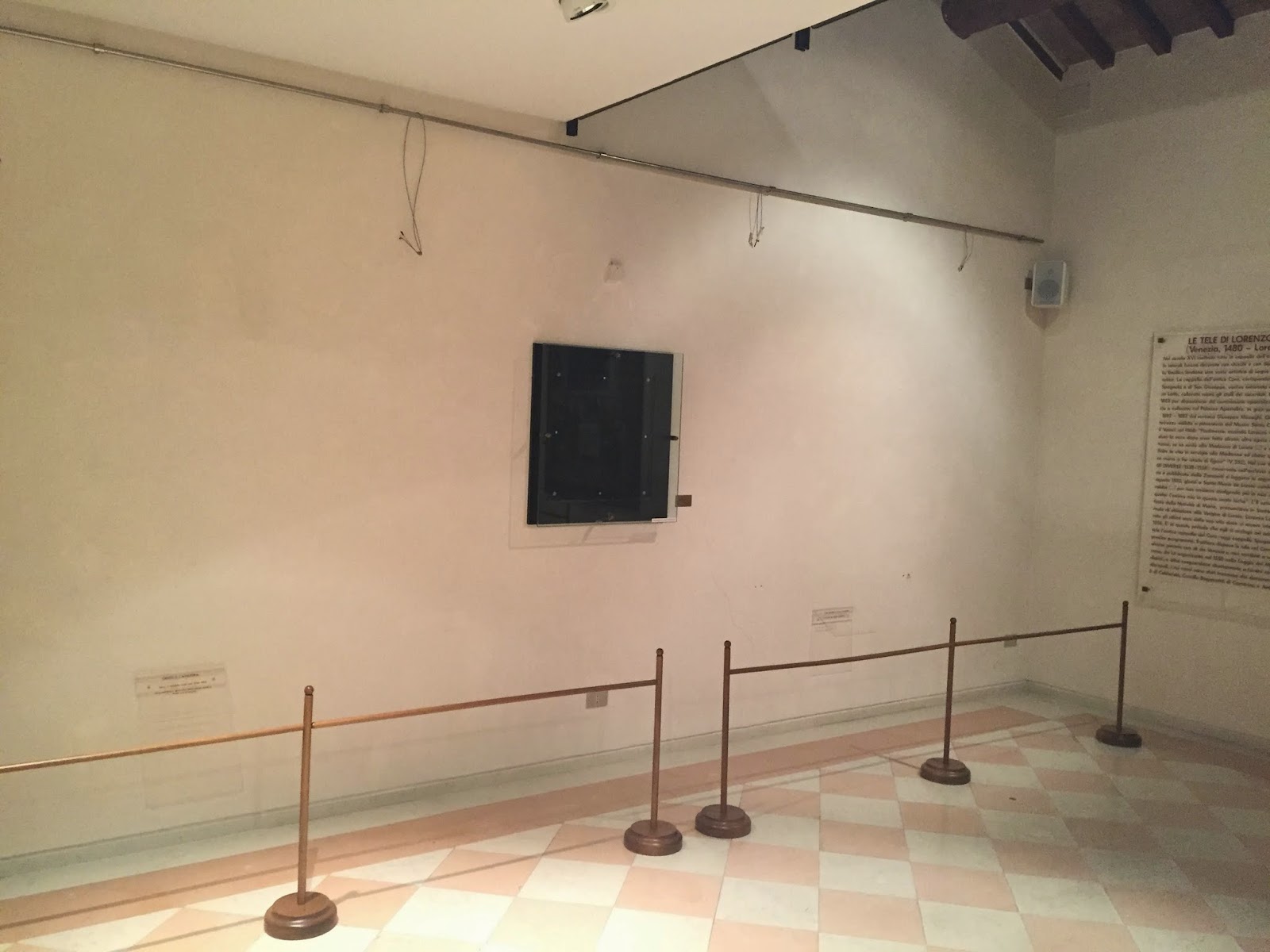
At Ancona the museum greeted me with this permanent-looking sign. The wonderful collection of Crivelli, Lotto and Titian is closed; who knows where the pictures are during the 'work in progress'. Websites are almost non-existent and usually useless; you can never check these things in advance. But closure is common - short term or long term, vicarious or strategic, partial or complete. In Bologna an entire wing of the museum was closed. A preposterous local exhibition of art 'from Cimabue to Morandi' had claimed the museum's greatest masterpiece, a Raphael altarpiece that ought never to be lent, but this is at least its third trip in the past two years alone. 

The Adriatic coast is a place of artistic pilgrimage for Lorenzo Lotto. Many of his works are in small and remote hill towns, and he was a major reason for my own visit. The biggest concentration is in Loreto, where he died. They have nine, usually on display in this room. Only one was on display when I visited.

The other artist I wanted to see was Piero della Francesca. I'd been planning for years to do the next leg of the Piero Trail, which I'd previously had to postpone at the last minute when I discovered a key picture was on loan in America. I was especially delighted to see two great masterpieces in Urbino, in a beautiful place in gorgeous hill town set in stunning countryside. What could possibly go wrong? Well, this:

The picture is unframed, behind an ugly glass panel under a harsh spotlight. Alas, this is common practice in Italian museums. Pictures are lit up like displays in a department store. And the lack of frames is lamentable. One of the most wonderful things about Italy is context - you get to works of art in historic settings, often part of collections of local art that give a much greater feel for regional genius than you get in a 'highlights' display in the great universal museums. But it seems they almost purposely rebel against that, seeking to show pictures shorn of context, presented as icons against a bare wall. 

Many museums are open only a few hours a day, sometimes just a morning, often with a break of two or three hours at lunchtime. Sometimes they will let you stay after closing time, which is wonderful. But it makes the logistics of visiting quite a challenge. The obvious response is that more funding is needed. But I'm not sure that's true; one are is grossly over-funded. There is never a lack of funding for major restoration projects, many of which are dreadful. 

In Rimini they are systematically wrecking their art collection. Conservators (I use the word loosely) are stripping down anything they think is repaint. Most museums have long since moved away from such drastic and irreversible action, which risks removing original paint in error. Instead of recreating what's lost, the Rimini restorers are replacing lost paint with hatching, to ensure we can tell what is original and what is restored. In some cases it works, particularly where large losses would require significant recreation. But the point is to avoid visual distraction. In Rimini it's done dreadfully and it's hugely visually distracting. Look at this detail from a Crucifixion attributed to Giovanni da Bologna, restored in 2013. An original fragment looks like it's been stuck on a piece of cheap furniture. The remaining paint seems to float on ugly and intrusively coloured background.  

They are so proud of their work on an altarpiece by Guiliano da Rimini of the Coronation of the Virgin with Saints that there's a 'before' photo shown next to it. Trouble is, it looked better before. Now the picture is ambiguous; is the hatching in the picture below covering an area of lost gilding or lost landscape? From a distance you can't tell; the contours are ambiguous. Originally the gold ground established a clear delineation between painted scene and background; now it's a blur. Instead of seeing a damaged but coherent work of art, we are invited to contemplate little isolated souvenirs of original paint. 

The saddest part of my trip was seeing the amazing frescoes by Salimbeni in Urbino. They are currently being restored, and I watched as a plasterer arrived with a big trowel and started throwing on plaster. As he worked it into the edges, original plaster sprinkled off onto the floor, and his big trowel bashed against the original paint. We think of restoration as a careful, clinical process. This was more like butchery. And in a few decades, the work will be re-done, the new plaster hacked out again, and a bit more of the original will be lost.

Italian museums seem too often to be run for the benefit of their conservators who get to play around with pictures to their heart's content. There is no money for basic things like keeping the doors open, providing guards, adequate lighting, decent display or a website. But they will fund an endless cycle of drastic restoration.

Rather than address existing problems, Italy is adding new ones. It seems keen to introduce the worst elements of modern museum practice. An ominous new sign hung at the entrance to the Museo Civici in Pesaro:
THE NEW CIVIC MUSEUMS AT PALAZZO MOSCA ARE PROPOSING TO BE THE STRONG DYNAMIC DRIVING FORCE BEHIND THE CULTURAL LIFE OF PESARO IN ADDITION TO FULFILLING THEIR INITIAL FUNCTION OF CONSERVING, VALUING AND EXHIBITING WORKS, THE MUSEUMS ARE PROMOTERS AND PRODUCERS OF NEW INITIATIVES LINKED BOTH TO LOCAL MUSEUMS AS WELL AS OTHER AREAS AND CONTEXTS.
MUCH SPACE IS DEDICATED TO CONTEMPORARY ART, NEW TECHNIQUES AND ARTISTIC EXPRESSIONS. THE AIM OF THIS SIGNIFICANT PROJECT OF RENEWAL IS TO ENCOURAGE MEMBERS OF THE PUBLIC TO GET INVOLVED WITH THE LIFE OF THE MUSEUM, ESPECIALLY THE YOUNG GENERATIONS, AND TO PROVIDE THE WHOLE COMMUNITY WITH LONGTERM STIMULI AND MANY REASONS TO VISIT THE GALLERIES.
THIS CHANGE IS THE RESULT OF A HAPPY COLLABORATION BETWEEN PUBLIC AND PRIVATE INDIVIDUALS AND HAS BENEFITTED (sic) FROM  THE HELP OF PEOPLE WHO HAVE CONTRIBUTED THEIR PARTICULAR EXPERTISE.
THE MUNICIPAL ADMINISTRATION, WHOSE DUTY IT IS TO LOOK AFTER THE MUSEUM'S LEGACY AND VALUE THE COLLECTION IS COLLABORATING WITH SYSTEMA MUSEO, A LEADING FORCE IN THE PLANNING OF NEW FUNCTIONS FOR MUSEUMS. WHAT EMERGES THEREFORE IS A NEW MANAGEMENT MODEL CAPABLE OF CIRCULATING RESOURCES IN WHAT CONTINUES TO BE THE HEART OF EVERY MUSEUM, ITS ARTISTIC HERITAGE. (sic, passim!)
Everything about this is ominous. The meaningless guff, the self-promotion by the consultants ('Systema Museo'), and the commonplace belief that to be relevant art must be contemporary. In Bologna one room was closed. You couldn't get in to see the detached frescoes. But you could peer through a doorway at this trite scene of 'Tahir Square':
Relevant and worthy, no doubt. But also obvious, trivial, artless. It's horrible that Italian museums are following common practice elsewhere and using old masters as mere foil for contemporary trivia.

Next week, I'll write about the good things I saw. But sadly there was much to lament.

Monday, 30 March 2015

'Pose Day': a new angle on museum selfies


Embedded image permalink
Picture: National Gallery
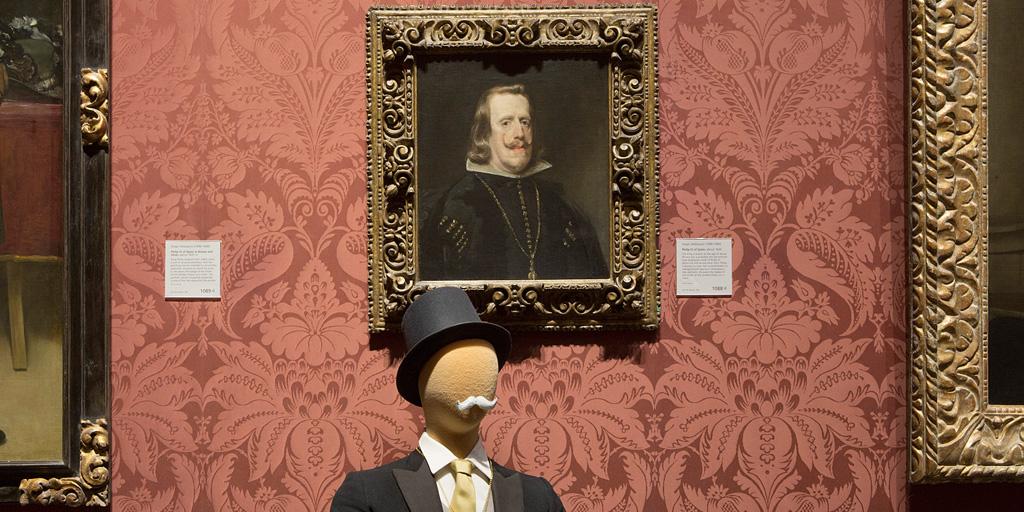
Sunday was 'pose day'. It's part of museum week, a Twitter initiative that encourages people to pose for selfies in front of works of art, striking a pose that imitates or reflects the art. Some people think it encourages new audiences, and others think it's harmless fun. But I think it's degrading to all concerned, reducing works of art to props and reducing museums to foils for people to brand themselves. I discussed it with CBC this week, but here are some more elaborated reflections.

There is something deadening about seeing crowds lining up to take their pictures in the same pose in front of the same work of art, rarely pausing to look at the backdrop. A picture that might embody the highest religious ideals or the profoundest philosophical thought, or simply the apogee of artistic technique, is cheapened when treated as an opportunity for a cheap visual joke. The National Gallery even took pictures of mannequins in front of pictures from its collection (above). It's a daft stunt that trivialises the art. And the visitors themselves are missing out. If they slow down and look they could start to understand why some works of art are appreciated as masterpieces. 

Some works of art reward close study of technique. Others - the greatest - are transcendent and inspirational. It's thrilling to stand before a late Rembrandt or a great Poussin; they represent the highest level of individual human achievement. Unlike modern medicine and science, technology and industry, great works of art embody the creative spirit of a single person, however much they rely on learned technique or reflect their times. Going to art galleries is a chance to step outside our own humdrum concerns and be inspired, to seek to understand ideas that are sometimes alien and to engage with the mind of the creator. For some that inspiration is technical - how was this painted, and by whom? For others it might be more historical, or spiritual. Appreciation isn't automatic; rewards are proportionate to effort, and often requires guidance. But instead of guidance, museums offer cheap gimmicks like selfies and 'pose day'. 

The impetus for all this nonsense doesn't come from patrons. It's being pushed by museums themselves, which now frown on lofty sentiments about art. They seek to make it as much as possible about us, and to bring it down to the must mundane level. They are absolving themselves of the responsibility to explain, offering instead cheap commoditised fun. The curators themselves have devoted their lives to studying art; they must surely think it's worthwhile. They understand what makes a picture great. But the highlights are now flaunted as nothing more than photo opportunities, tokens of high culture that flatter the selfie-taker. 

At one level it ceases to matter whether a picture is even authentic if it's just to be used as background. But at another level I think it does matter to patrons; they do go to museums hoping to participate in a cultural experience. It matters that the backdrop has been identified as a masterpiece, even if they don't know why it has been designated great. The promoters of 'pose day' are cheating them. They are offering a pretend shortcut that requires no effort, but which equally offers no real reward. Promoting pose day shows contempt for visitors, substituting a simulacrum for the actual experience of engaging with art. The visitors leave with a cute photo, but no new knowledge or insight.


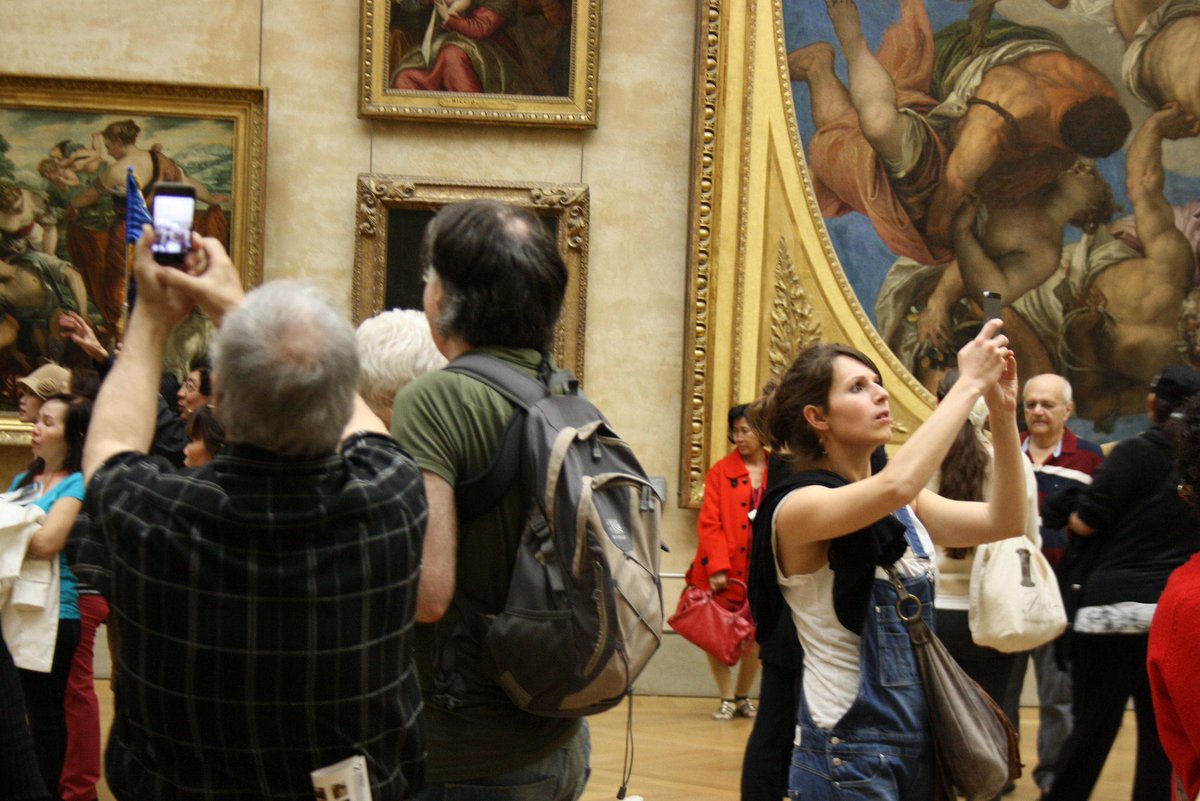
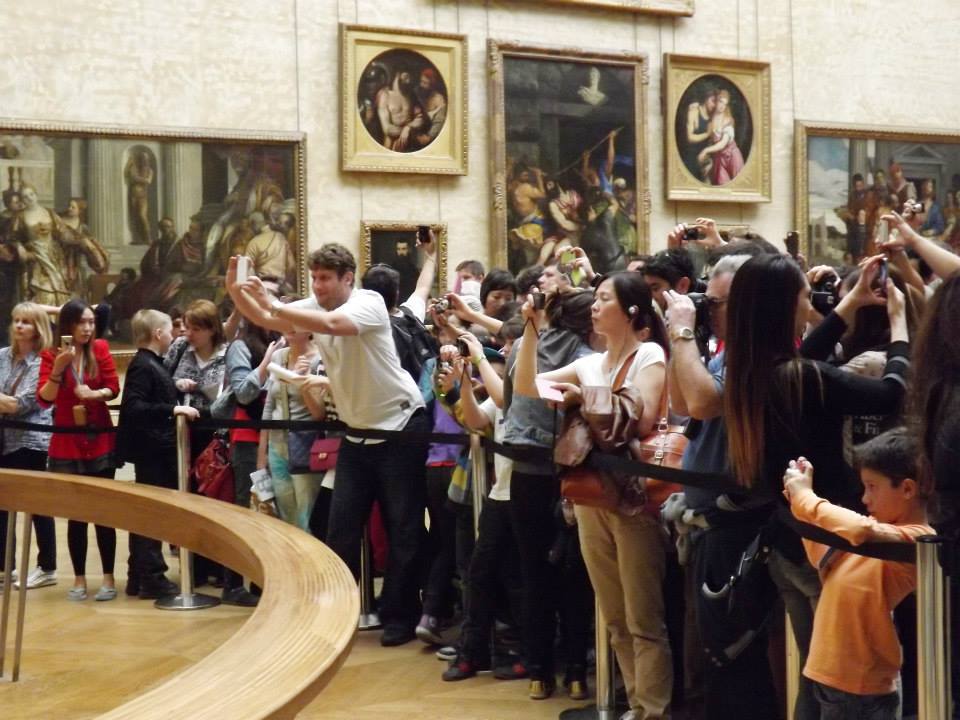
Embedded image permalinkThe icon of all that's worst about the modern museum is the image of photo-wielding crowds in front of the Mona Lisa. But now even this is turned around and presented as virtue. These pictures were tweeted by the Louvre itself, celebrating the idea that a picture can be like a celebrity. Rather than see this impoverished experience for what it is, we are told to enjoy it as if we are taking the role of the paparazzi. Playing at being a celebrity photographer is elevated as the highest ideal of the modern commodified museum visit. 


Thursday, 26 March 2015

Wtewael exhibition in Utrecht


Pleasure and Piety: The art of Joachim Wtewael Centraal Museum Utrecht to 25 May (then to Washington DC and Houston)

These two small paintings on copper both show Vulcan catching his girl Venus in flagrante with Mars. They're both exquisite and explicit little masterpieces brimming with those wonderfully contorted mannerist figures that Joachim Wtewael famous for. But what a different mood he creates. In the first version, from the Mauritshuis, there's a sense of foreboding. Venus guiltily averts her gaze. Mars points an accusing finger, but his expression belies his anxiety. This is Serious Stuff indeed. The later version in the Getty is more warmly coloured, and terror gives way to glee. Mars slaps his face ('doh!'), Venus looks away wearily ('what a fine mess you've gotten us into'). Everyone else seems to be enjoying their embarrassment. It's wonderful to see these two pictures together in the first major exhibition of this fascinating artist. 

Joachim Wtewael was a big cheese in early seventeenth century Utrecht. He was a successful businessman and investor, and he was allied with the more conservative Calvinists. Imagine that - the more conservative Calvinists! But I think the Getty's Mars and Venus Surprised by Vulcan gives better insight into his outlook on life than his political alliances. Love and Lust is the exhibition's title in Dutch, and I like it better than Pleasure and Piety. Even in the religious pictures, I see lust more than piety.

Wtewael was also a success as an artist, though he didn't need the money and kept many of his own paintings. But after his death he fell from favour and he was little known. He became fashionable again in the 1980s and 1990s, when many of the pictures in this show were acquired by American museums. It was part of a general revival of interest in Northern mannerism, which had been neglected as either a footnote to Italian mannerism or a prologue to the Dutch golden age. The exhibition explains Wtewael mainly in a northern context, emphasising his learning from Prague court artist Bartholomeus Spranger and borrowing from prints by Hendrik Goltzius. But I wonder how much was taken more directly from the high renaissance, which he would have experienced on his travels in France and Italy. Dramatic poses and extreme foreshortening reveal ambition to incorporate the highest achievements of Renaissance art. It doesn't quite work; Wtewael doesn't have the solid grounding of the Italians, nor their knowledge of anatomy. Biceps twist like dough rather than flex as muscles, and all his figures seem to have the same oddly textured torsos.

I can understand why some people don't like him, but I love his crazy vision, those wonderfully contorted poses and choreographed masses of figures, the rich range of colouring from pastel shades to vibrant acidic contrasts depending on the mood. He had an instinct for drama, but also a great sense of fun.
  
Photo    Photo
He loved animals; cats and dogs abound. On the left is a delightful donkey from the Wedding of Peleus and Thetis, and right is a cat from Caritas, which is with Johnny van Haeften. He clearly lacked Leonardo's interest in precise observation of nature if he thought that's how cats drink, but this is very early for such characterful animals. Walt Disney avant la lettre.

    Photo
Although he could paint for his own amusement, his pictures are really varied. I'd thought his good works were the early ones, but it's not as simple as that. Even the earliest pictures vary in quality. The Wedding of Peleus and Thetis hangs next to The Wedding of Cupid and Psyche. Both are from about the same date, and both are fine pictures, but the Peleus and Thetis is far superior. The portraits are competent but unexciting. The kitchen scenes are derivative, and The Fruit and Vegetable Seller (above) is particularly weak. I thought maybe a Peter Wtewael, or at any rate a collaboration. The background scene (detail above) is quite crudely painted, and far removed from Joachim's refinement. It's attributed in full in both the exhibition catalogue and Anne Lowenthal's catalogue raisonnĂ©; perhaps they assume the broad technique is because it was intended to be hung high as an overmantel, and perhaps they are right. The kitchen scenes aren't great, but they show that the frequent assertion that Wtewael didn't engage with naturalism isn't quite true.

I was glad to see the full range of Wtewael's work in this show. The extraordinary quality and inventiveness of his best pictures is all the more striking against his more routine and derivative works. The catalogue is excellent, with short but intelligent and informative essays, thorough catalogue entries and good reproductions. The catalogue speculates about the role of his studio in producing copies and variants, and I'd love to have seen some possible examples alongside authentic works to get a sense of the studio's operation. I'd like to have seen more of the drawings too; the selection in the show is meagre, which is especially disappointing after reading Stijn Alpers's great chapter in the catalogue, which suggests that a lot of the attributed works might be workshop replicas. It would have been good to see some of those comparisons for ourselves.

There will be more drawings and more paintings on the US leg of the show. Weirdly a third version of Mars and Venus Surprised by Vulcan will be in both US venues, but not in Utrecht - despite the fact that it currently hangs in Amsterdam. I don't know what they were thinking in disallowing us that comparison; maybe a misplaced concern for symmetry in the display? It surely can't be a conservation issue if it's able to travel to the US. But my more profound reservation about the Utrecht exhibition was the truly dreadful staging, which is possible the worst I've ever seen.
Photo
The lighting created shadows from the frames that obscured material parts of Wtewael's small pictures. In this on the figures point towards a head that can't be seen. This photograph actually lightens the obscured section, which is invisible in the exhibition.
Photo
Even my favourite, the Wedding of Peleus and Thetis was partly obscured. Here's a detail from the shadows, showing how much is hidden:
Photo
It amazes me that pictures can be sent across the globe so they can be seen together, only for the effect to be ruined by thoughtless presentation.
Another picture is spoiled by a big lump of dirt inside the glass vitrine. The thing that makes me really angry about details like this is not only that it so impinges on our ability to appreciate the art, but also that so many museums will strip a painting down and re-do it if there's so much as a speck of discoloured retouching. They'll restore at great cost and risk and often causing irreversible damage, all in the name of making the picture look better. But then they won't spend five minutes cleaning the glass in front of it.

I made a special daytrip to Utrecht to see this show, taking time off work to fly to Amsterdam and get the train to Utrecht. Not only that, I had to endure passport control at Standsted Airport (if you've been, you'll know what I'm talking about). All that to see this exhibition. And yet the organisers couldn't be bothered to take five minutes to clean the glass sufficiently for a key exhibit to be seen unobscured.