Showing posts with label Cultural Policy. Show all posts

Wednesday, 21 October 2015

Cultural Value

Picture: Telegraph
Our cultural apparatchiks have turned away from the narrow instrumentalism of measuring performance against targets, which probably just reflects that they could never meet the targets. But art for its own sake is still passé. So how can they justify themselves? The Arts and Humanities Research Council has spent £2m to find out. Private Eye reports that the project's advisors have given over a tenth of the funding to themselves. Cultural elites have never been shy about rewarding themselves with commissions, but in the old days the commissions were for actual artworks, and at least we might have got a good picture out of it. The new elites spend cash to produce reports on things like "the contribution of participatory user-generated machine-cinema to cultural values".

A grant of £38,427 was made to “evaluate the relationship between arts and cultural engagement and long-term health outcomes in the UK”. It's an odd topic for the humanities, given the need for high-level statistical knowledge and engagement with the techniques of medical research. But those problems were bypassed; all they got for £38k was some superficial summaries of fifteen existing studies. It wasn't research at all. It was just advocacy, squandering money to highlight a supposed link between arts funding and public health.

They spent £26,872 for a project “using Facebook to investigate local history: experience, value and policy implications in one town”. It “works with” one Facebook page: ‘Forgotten Abergavenny’, hoping to contribute to the nation’s health by “assisting the understanding of the experiences and value attached by users to the most popular and accessed social media platform in the UK, thus facilitating the usefulness of such a platform as a means for the delivery of news, information and other content relevant to governments and local authorities”.

There is a cynical element to this, where self-selected elites reward themselves with public money. Explaining it as corruption makes easier sense of the absurdity of some of the funded projects. But I think they're actually sincere in wanted to define cultural value better. Trouble is, their stilted efforts to define the problem reveal it as a fool's errand. They want to avoid the accountability that comes from instrumentalist measures, but also avoid the political and philosophical challenge of making the case for art's intrinsic value.

Mocking academic research is a staple of populist philistinism. But my aim is different. I criticise them because I love the arts and humanities, and these ridiculous projects reflect badly on the entire enterprise. The debate needs to be animated with some strong ideas, not using oodles of public cash to manufacture bullshit advocacy research to bolster the case for yet more public cash. 

Bendor Grosvenor reports on another manifestation of this debate with the Arts Council getting Alain de Botton to make a moronic instrumental case for the arts. Arts Council and Alain de Botton is a deadly combination!

Monday, 13 April 2015

Campaigning for Good Curatorship

I like curators, especially good ones. So I should be delighted to discover that there's a Campaign for Good Curatorship. The campaign wants to put knowledge of collections back at the heart of museums, and I'm all for that too. And they want 'good' rather than 'great' or 'excellent' curatorship, which is a victory for language and common sense.  But I recoil from its manifesto, which seems to be trying to appropriate all the anti-curatorial guff that's infected the museum sector. 

They say that museums "have a vital role to play in a healthy, tolerant and inclusive society". Fine sentiments, but they don't survive scrutiny. What can curators do to fulfill their 'vital' role in promoting health? Do they mean 'vital' in the sense of central to what curators do, or vital in the sense that museums must lead the charge on behalf of society? Neither claim is credible. And that weasel-word 'inclusion'. No one explicitly argues for an 'exclusive' society, but the meaning of inclusive is hotly contested. The term is either politically contentious or else vacuous. 

They want to reach a 'balance' between community engagement and expertise in objects. Maybe this is just a problem of hasty drafting, but I think treating engagement and expertise as opposite poles that require balancing is a disastrous strategy. Museums will engage communities on the basis of their collections. Curatorship has been undermined because museums have tried to convince politicians that they should be funded because they can play all kinds of instrumental roles like promoting social inclusion and public health. Convincing them of the value of museums in their own terms seemed to much like hard work. But the other approach has backfired, because it has put museums in direct competition with specialists. In a contest over the health budget, health professionals will beat museum professionals. 

The manifesto concludes with some specific demands, but they are as wishy-washy as something from the student union. They want the Department for Culture, Media and Sport to 'recognise' the role of good curatorship, whatever 'recognition' means. Worse still they want the Arts and Humanities Research Council to sponsor research into the public benefit of curatorship. Can nothing happen without a government grant these days? Given that the campaign's whole premise is that there is public benefit to curatorship, this isn't really research - it's marketing. Just because it's marketing a cause I happen to espouse doesn't mean it needs or deserves a government grant.  

This gets to the nub of my beef. The problem isn't that curatorship is 'under-researched' or that the DCMS hasn't 'recognised' its value. The problem is that the case for curatorship hasn't been made robustly. In fact let's put it in simpler terms: the case for knowledge hasn't been made robustly. For a generation museums have been capitulating to an agenda that devalues objects and disdains cultural knowledge in favour of the instrumental pursuit of political objectives.

We don't need government grants or campaign bullet points. We need to make a more forceful case for the value of culture. Lots of people are doing that already. I often disagree with many of them; it doesn't have to be a unitary case, and we don't all need to be friends. There are lots of ways to value and engage with culture. But lily-livered appeasement of the access and social justice agenda is fatal. Good curators don't promote public health or an inclusive society. They understand quality and context. The select and preserve and display and interpret objects, and in doing those things they play a role in defining a society (heck, let's use an old-fashioned term: civilization) that's worth being included in. The historical and artistic legacy preserved in museums is valuable in its own right, and is degraded when it's deployed as a tool in the latest public health initiative. Let no one be in doubt about the vital role of curators, and let's not let this campaign get away with underselling it.

Sunday, 15 March 2015

Plus ça change


James Millingen Some Remarks on the state of learning and the fine-arts in Great Britain J. Rodwell 1831

London is still blessed with a handful of outstanding second hand bookshops where you can find all manner of things you'd never have thought to look for on Amazon. At the  wonderful Any Amount of Books I found this battered pamphlet from 1831 that advances strikingly modern arguments about state support for the arts. It's rapidly disintegrating, but pages were still uncut. It nearly died unread, which is especially sad given the disproportionate attention paid to some of our contemporary reports on the arts, which ought to die unread. It's sometimes unsophisticated and sometimes crudely elitist, but its flamboyant disdain for the plebs shines oblique light on the more politely expressed snobbish sentiments of today's faux-egalitarians. 

Millingham shares the modern belief that the arts are a good investment, but he has an honourable reticence about making a merely economic argument. He quotes French director-general of finances Necker: "Learning and science repay the State with usury the assistance which the State affords to those who profess and cultivate them", and then calculates the French government's income from the estimated 5,000 (!) tourists in Paris at any given time. He hopes this will "prove a satisfactory answer to the Utilitarian and the Sordid, and shew them, that what is honorable, is generally profitable at the same time". Utilitarian and sordid. I like that.

A better argument is that state funding produces better art, though he regrettably has the modern vice of seeing 'better' in instrumental terms: "The relative decorum and piety observed on their stage, and which contrasts so much with the licentiousness and coarseness of our theatres, may be reckoned among the causes which have contributed to improve the manners of the middle and lower orders". Isn't this close to the attitude of many today, who want the lower orders herded into museums and theatres, but have a horror that they might watch Jeremy Clarkson or read the Daily Mail? Of course today they use terms like 'socially excluded' rather than 'lower orders', but the content echoes. 

In 1831, as today, luvvies were bemoaning the 'new' idea that state funding should be cut because the market will provide: "An opinion has, of late, been gradually gaining ground in this country, that it is neither a duty nor good policy, on the part of the State, to grant encouragements to the Sciences and Arts which should be left, like any other commodity, to find their natural price at the market, according to the degree of demand which may exist for them". So much for the idea that it's a novel conspiracy by neoliberals.

There's lots more in this short pamphlet. He complains that England's two universities have 'grown corrupted': "At one period, they were of easy access to young men of slender fortunes, but within the last century they have been rendered expensive, in order to become select and respectable. In other words, that they should produce men of fashion rather than men of learning" (p. 8). Today's universities are expected to churn  out credentialed employees rather than 'men of fashion', but they continue to grow corrupted. I bet people today would recoil at the term 'learned' lest it imply that others are 'less learned'.

I like Millingen's directness; none of the respectful networking of today's half-hearted critics. He tells us that learned societies contain a few learned men, but most "can no more be called men of learning than subscribers to a concert can be called musicians". Today we are more deferential, but many of the trustees of our great cultural institutions are still unqualified buffoons.

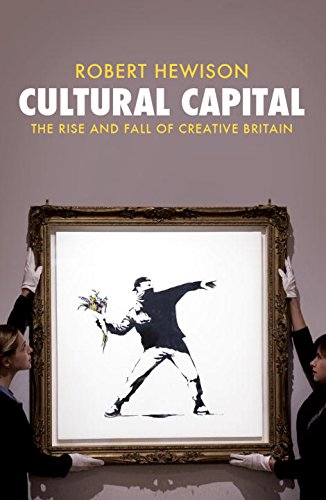
Cultural Capital by Robert Hewison

Picture: Amazon
Robert Hewison Cultural Capital: The rise and fall of creative Britain Verso 2014 £14.99

This narrative history of British cultural policy from 1997 to 2012 ruthlessly skewers the comic ineptitude of successive government attempts to corral the arts sector towards instrumental ends. The purveyors of managerial efficiency squandered money on white elephant projects and hamstrung arts professionals with meaningless targets and constant monitoring. The managers couldn't manage. Even widely-lauded policies had unintended consequences; free admission was intended to increase access, but visits by lower socio-economic groups actually fell. This book is a compelling and damning account of years of ineptitude, but the critique is one-sided. Hewison focuses on government policy, but he neglects the role of the cultural sector itself in the trends he describes. He is too ready to attribute all ills to 'neoliberal' ideology, which cannot bear the weight of his argument.

Neoliberalism is usually understood as a doctrine seeking extension of the free market - free trade, less government intervention, using markets to set prices and allocate resources. Hewison describes the opposite: removing the market mechanism with free museum entry and increased bureaucratic management by central government. Neoliberals would heartily endorse much of Hewison's criticism of government policy. Hewison doesn't explain the links to neoliberal thinkers; the term is derogatory rather than analytic. It's used in the same way that less thoughtful conservatives call anything egalitarian or liberal 'socialist', as if it's all on a continuum with show trials and gulags. Criticising neoliberalism is more like picking a team than analysing a problem.

I think the reason Hewison doesn't probe too deeply is that he doesn't want to address the complicity of the cultural sector itself in the trends he describes. Far from an alien imposition, the instrumental pursuit of goals like social inclusion and economic growth were being ardently promoted from within the cultural sector well before the Blair government adopted them. Radical museologists and critical theorists and multiculturalists have become increasingly influential. And the cultural sector's clamour for money has long been supported by claims that it's a good investment. The cultural sector didn't reluctantly sell out in return for increased funding; they were actively marketing themselves to policymakers by asserting that they could meet targets and deliver government objectives.

It's sometimes hard to discern whether Hewison is criticising a policy's effectiveness or its objective. He discusses generally some of the dilemmas of multiculturalism and diversity, but seems mainly critical of the ineffectiveness of the policies pursued rather than their aim. He is downright patronising when he writes that, "Unsurprisingly, minorities are interested in art that reflects their own experience" (p. 82). Can you imagine turning that around and saying "white middle class people are interested in art that reflects their own experience"? High culture gets to be high culture because it speaks to universal experience.

Despite his fondness for writing about neoliberalism, the discussion of economics is the weakest part of the book. He repeats the old saw that art is ideal for money laundering, but he thinks it's because, except for old masters, it's easily moved and can be traded in any currency. How many commodities does that not apply to? Surely unique works of art are especially traceable. There are reasons why the art market might be targeted for money laundering, but that's not it.

Then he says there's an "imbalance between an excessive accumulation of surplus capital and a lack of consumption to sustain growth. The solution was to stimulate production by offering 'fictitious capital' in the form of credit - hence the development of the sub-prime mortgage market in America that engendered the global crisis [...] although it is logical to borrow to invest, there is a strong temptation not to invest in production, but in assets such as stocks and bonds, futures, derivatives and property, where value is generated by competitive demand and governed by sentiment. Profits come out of thin air" (p, 157-8). Wowsers. I'm not even sure what that means, but I take comfort from confidence that Hewison doesn't know either. Companies issue bonds and shares to raise money to invest in production. But somehow bonds and shares are not investment in production. 

He thinks art is emblematic because it has 'almost no' material value and is worth what people might pay for it in the future. A financial asset is worth the present value of future cashflows. But actually that's not true of art. If it's really about future value then the art market is just a ponzi scheme, everyone buying on the basis of what the next person will pay, on the basis of their assumption of what the next person will pay. Obviously the expectation of future value is a consideration when buying art, but it is a consumption good before it's an investment good. 

This book tells people what they want to hear. Neoliberalism is the big ideological villain. Government should shower the cultural sector with money, but otherwise leave it alone. Hewison's account of government policy is important and damning, but it's only half the story. There are other ideas that are more subtle than neoliberalism, but more concretely damaging to culture.